
Why Employee Management Is Still Fragmented in 2026
Written by Repute Network, Jun 4, 2026 · 5 min read
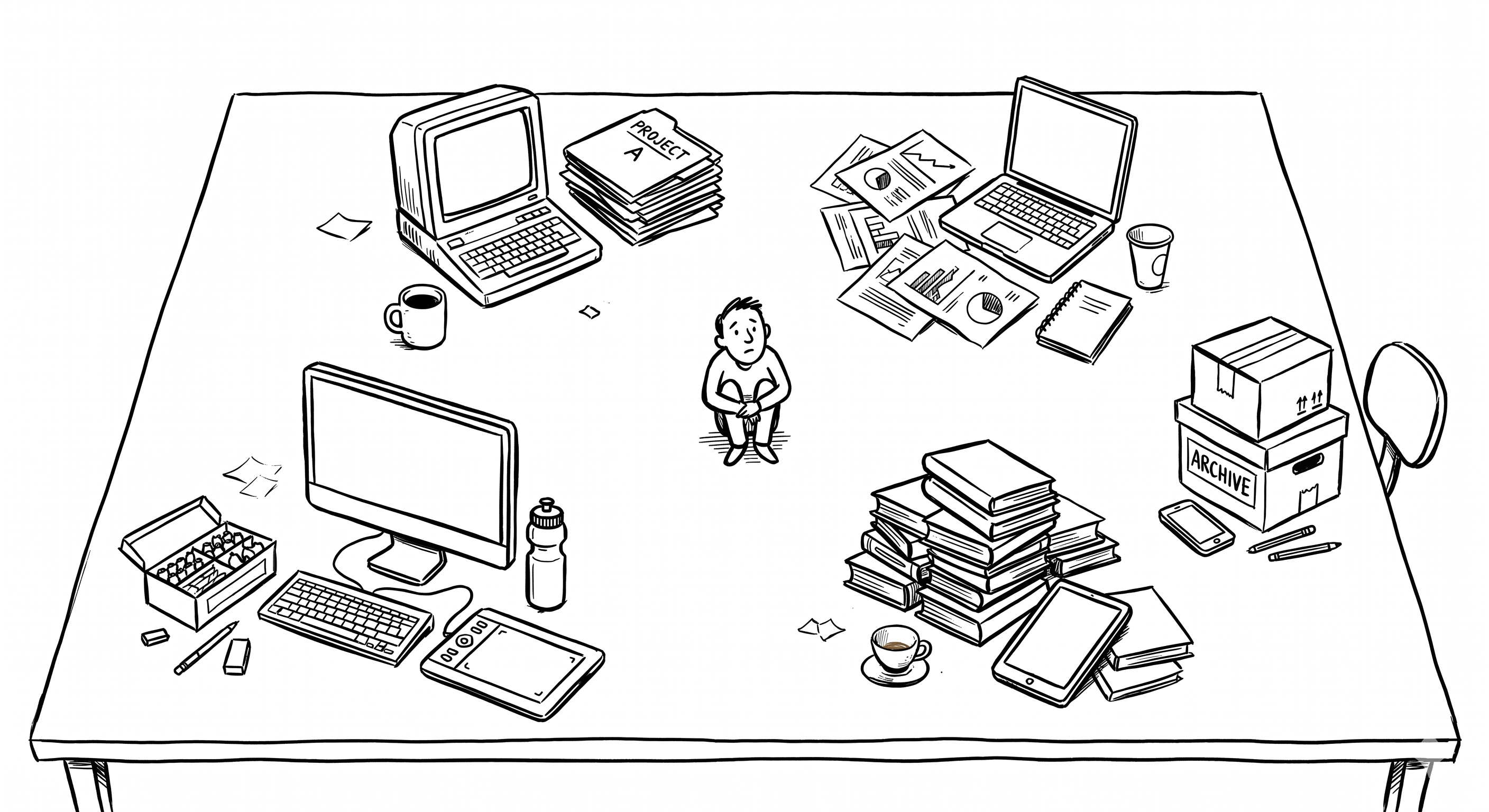
Priya joined the company on a Monday. By Wednesday, she had received seven separate emails asking her to log into seven separate systems — one for payroll, one for benefits, one for time tracking, one for learning, one for IT access, one for the company directory, and one she still hasn't figured out the purpose of. Her manager, who had been with the company for eight years, shrugged. "That's just how it works here," he said. Employee management fragmentation isn't a new problem. But in 2026, after years of digital transformation investment and a generation of HR technology adoption, it remains one of the most persistent and quietly costly patterns in modern organisations.
Why employee management is still fragmented in 2026
The honest answer is that fragmentation was never the intention — it was the outcome. Organisations didn't set out to build disconnected systems. They made sensible decisions, one at a time, over many years. A best-in-class payroll tool here. A specialised learning platform there. A performance management system acquired through a merger that nobody wanted to replace. Each decision made sense in isolation. Together, they created an environment where the average mid-sized organisation now manages employee data across eight or more separate platforms.
This is what happens when technology strategy is driven by point-in-time problems rather than a coherent view of the employee journey. Call it the accumulation gap — the growing distance between where employee data lives and where employee decisions actually need to be made. Every new tool added to the stack widens it. And unlike infrastructure debt, which shows up in server bills and outages, the accumulation gap shows up in hours: HR teams manually reconciling data between systems, employees re-entering information they've already provided, managers making decisions with incomplete pictures.
McKinsey research on organisational effectiveness has consistently found that administrative burden is one of the primary factors reducing HR's ability to operate strategically. The systems problem and the people problem are the same problem.
The problem isn't the tools — it's the space between them
Individual HR platforms are, by most measures, better than they've ever been. Payroll accuracy has improved. Learning platforms are genuinely engaging. Performance tools have moved from annual reviews to continuous feedback loops. Each category has matured significantly over the last decade. Yet the employee experience of navigating across these tools has not kept pace with the quality within them.
That gap — between what each tool does well and what happens when an employee needs to move between them — is where fragmentation lives. Onboarding a new hire typically requires coordinating across six to twelve separate systems, depending on company size. Not because any single system is broken. Because the handoffs between them are manual, invisible, and inconsistently executed every time.
For HRMS platforms, this creates a specific tension. You are often the system of record — the source of truth for who an employee is, what role they hold, what they're entitled to. But when the systems around you don't connect back, your record drifts from reality. The employee's truth gets distributed across platforms that don't share it. And the HRMS, which should be the backbone, becomes just another silo.
Connection is becoming the core product, not the add-on
For a long time, the competitive conversation in HR technology was about features — who had the better payroll engine, the more configurable org chart, the smoother mobile experience. Those things still matter. But the organisations making meaningful progress on fragmented employee management aren't doing it by switching to a single all-in-one platform. They're doing it by connecting the platforms they already have.
This changes what HRMS platforms need to be. The value is no longer only in what the platform does within its own walls. It is in what the platform makes possible for every other system connected to it. An HRMS that exposes clean APIs, supports real-time data synchronisation, and enables automated triggers across the employee lifecycle becomes infrastructure — the backbone through which the entire employee journey gets coordinated.
The platforms building this capability are not just retaining customers. They are becoming genuinely harder to replace.
Internal link opportunity: HRMS integration architecture and ecosystem design
The shift from system of record to system of connection
The organisations moving away from fragmented employee management are choosing platforms not just on feature depth, but on ecosystem openness. They are asking a different question: not "what does this system do?" but "what does this system make possible?" That shift in buying criteria is a signal. It reflects a growing recognition that the employee experience is not produced by any single tool — it is produced by how tools work together.
HRMS platforms that embrace this framing are repositioning themselves from software products to connected ecosystems. The practical difference is significant: a product competes on its own capabilities; an ecosystem compounds in value every time a new connection is made. Every integration, every automated workflow, every piece of employee data that flows without manual intervention adds to a network that becomes more valuable — and more embedded — over time.
The move from feature platform to connected ecosystem is not a product roadmap item. It is a strategic repositioning of what an HRMS is for.
A question worth sitting with
Fragmentation persists not because better tools don't exist, but because the connections between tools haven't kept pace with the quality within them. The organisations closing that gap are doing it by choosing platforms designed for openness — platforms that treat integration as infrastructure, not afterthought. The HRMS sitting at the centre of an employee's data has more leverage over that experience than any other system in the stack.
If your platform holds the record of every employee in your customer's organisation — what would it mean for every other system in that employee's life to feel like part of the same experience?


